
What Makes a Good Workforce Management System?
Australia’s mining and construction sectors are at an inflection point. Mining alone contributes over $455 billion to Australia’s GDP and employs more than 270,000 workers nationwide. The construction industry is the largest it has ever been – yet both sectors are grappling with skills shortages, regulatory pressure, and the relentless demand to do more with less. In this environment, how you manage your workforce isn’t just an operational detail. It’s a competitive advantage.
So what separates a genuinely effective workforce management system (WMS) from one that just adds another layer of complexity? Here’s what to look for.
What Is a Workforce Management System?
A workforce management system is a suite of digital tools that helps organisations plan, schedule, track, and optimise their people. At its core, it brings together rostering, time and attendance, compliance tracking, payroll integration, and reporting into a single platform – replacing the disconnected mix of spreadsheets, paper timesheets, and manual processes that still operate in far too many workplaces.
In high-stakes industries like mining and construction, a WMS isn’t a luxury. It’s the infrastructure that keeps complex, multi-site operations running safely, legally, and efficiently.
The Stakes Have Never Been Higher
The scale of Australia’s workforce challenge makes a compelling case for smarter systems.
In construction, Infrastructure Australia’s 2025 Market Capacity Report estimates a current shortfall of 141,000 workers – a figure projected to surge to over 300,000 by mid-2027 as renewable energy, housing, and infrastructure projects ramp up simultaneously. One in four construction businesses currently report job vacancies, and 85% of those struggle to find suitably qualified workers.
The mining picture is similarly stretched. Western Australia’s 48 proposed resource projects are expected to require more than 11,000 new workers by 2029, and vacancies across the sector have surpassed the peaks of the 2011-12 mining boom. With a combined mining and automotive workforce of approximately 632,700 workers predicted to grow by over 72,000, the pressure to retain, schedule, and develop people effectively has never been greater.
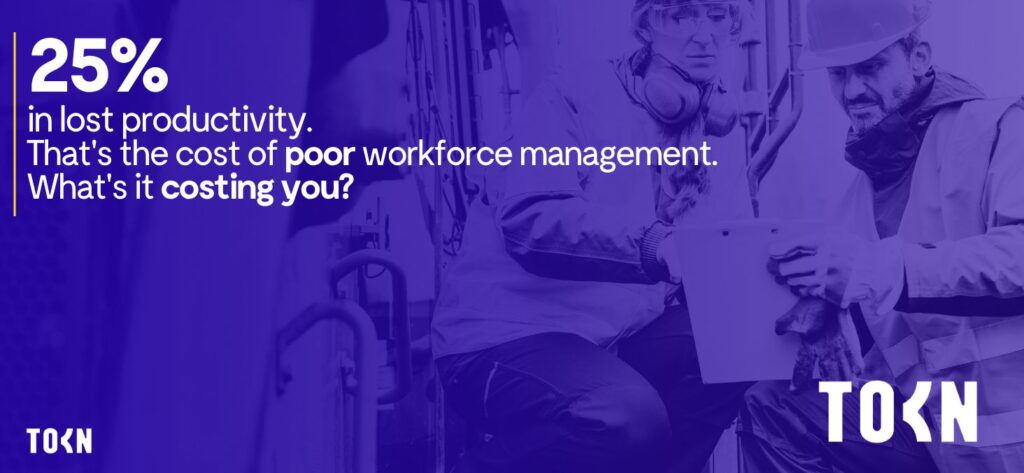
Against this backdrop, inefficient workforce management isn’t just inconvenient, it’s costly. Studies show that poor workforce management can reduce productivity by up to 25%, costing large operations millions in lost output every year.
The Six Hallmarks of a Good Workforce Management System
1. Real-Time Visibility Across Sites
In mining and construction, your workforce is rarely in one place. Crews rotate across remote sites, shift patterns change at short notice, and contractor workforces move in and out constantly. A good WMS gives operations managers a live picture of who is on site, where, under what qualifications, and under what conditions at any moment.
This isn’t just about convenience. Knowing who is on site underpins safe operations. Without it, organisations face safety exposure, liability risk, and the kind of compliance gaps that draw regulator attention.
2. Smart, Automated Rostering
Manual rostering for large, multi-shift workforces is a significant source of error and inefficiency. A strong WMS automates scheduling based on availability, qualifications, fatigue management obligations, and operational demand dynamically adjusting as conditions change.
This matters enormously in Australian mining, where Award and Enterprise Bargaining Agreement (EBA) obligations, fatigue management regulations, and shift certification requirements create genuine complexity. Getting it wrong exposes businesses to underpayment claims, safety incidents, and regulatory penalties. Getting it right reduces overtime costs, minimises scheduling gaps, and builds the kind of fair, transparent rostering that actually helps with staff retention.
3. Built-In Compliance Management
Australia’s work health and safety (WHS) framework is rigorous, and it’s getting more so. In construction, 2025 and 2026 brought new obligations around psychosocial hazards, the engineered stone ban, and National Construction Code updates. From July 2026, mandatory payday superannuation adds another layer of payroll compliance pressure.
In mining, the regulatory environment is equally demanding — from site access controls and competency verification to fatigue management and contractor oversight.
A good WMS embeds compliance into daily operations rather than treating it as a separate audit process. Certifications and licences are tracked automatically. Expiry alerts are triggered before they become a problem. Induction records are stored and retrievable. The result is an organisation that is audit-ready as a matter of course, not scrambling when an inspector arrives.
4. Accurate Time, Attendance, and Payroll Integration
Digital timesheets that eliminate manual entry errors are a baseline expectation of any modern WMS. But the best systems go further capturing real-time attendance data, flagging anomalies, automatically applying correct pay rules including shift penalties and allowances, and feeding clean data directly into payroll.
For large mining and construction operations with complex Award structures and dispersed workforces, this integration is where significant cost savings live. Even a small systematic error in overtime calculations or allowance application, multiplied across hundreds of workers over months, compounds into a serious financial and reputational problem.
5. Mobile and Field-Ready Tools
The workforce that needs a WMS most is rarely sitting at a desk. Field workers, site supervisors, and mobile crews need to access rosters, submit timesheets, report incidents, and check compliance documentation from wherever they are often in areas with limited connectivity.
A good WMS is built for this reality. Mobile-first interfaces, offline functionality, and self-service tools for workers reduce the administrative burden on managers and create a continuous, reliable data flow from the field back to operations.
6. Meaningful Reporting and Workforce Analytics
Data is only valuable if it leads to better decisions. The best workforce management platforms turn attendance, scheduling, compliance, and productivity data into clear, actionable insights helping leaders identify fatigue risks before they become incidents, spot patterns in absenteeism, benchmark crew productivity across sites, and plan future workforce needs with greater confidence.
The Cost of Doing Nothing
It’s worth being direct about what staying with legacy systems actually costs. Manual timesheets, paper-based rostering, and fragmented communication channels create data inaccuracies, resource misallocation, and compliance risks that accumulate quietly until they don’t. For a large mining or construction operation, the combined cost of scheduling inefficiencies, payroll errors, compliance penalties, and avoidable safety incidents can run to millions of dollars annually.
In a sector where 63% of construction firms cite labour costs and 59% cite labour and skills shortages as substantial threats to project delivery, operational efficiency isn’t optional. Every worker needs to be in the right place, properly qualified, correctly paid, and genuinely supported. A good workforce management system is what makes that possible at scale.
How TOKN Can Help
At TOKN Technology, we work with organisations in mining, construction, and resources to design and implement workforce management solutions that fit the real complexity of your operations that are not a generic out-of-the-box product that creates as many problems as it solves.
Whether you’re managing a single remote site or a multi-state operation with thousands of contractors, we can help you build the visibility, compliance capability, and operational efficiency your workforce demands.
Get in touch with the TOKN team to find out what the right WMS looks like for your business.